Tag: Current
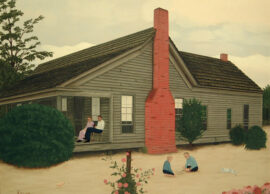
Memory Painters: The Art of Memories
This exhibition presents memory painters as important documentarians of visual art as storytelling, and how surprisingly sophisticated art exists in the work of intuitive painters.
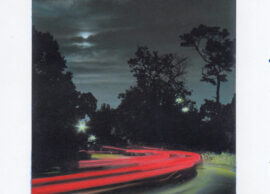
Ann Stautberg: Night Works
The Night Works series by Houston-based artist, Ann Stautberg, challenges preconceived notions about photography. Her background in painting and printmaking adds an unexpected painterly and dramatic approach to the art of photography.


Emergence: Transformation Through Glass and Light
Emergence: Transformation Through Glass and Light will feature 20 large glass installations created by Dallas glass artist, Carlyn Ray, with suspension and interactive elements to surprise and delight each visitor. Through this body of work, Ray explores the immersive potential of art; how light, color and form can evoke emotion and foster deeper connection. She invites viewers to move beyond observation into feeling, allowing each piece to become a portal for reflection and inner exploration.

Independence Day 2025
Independence Day in the United States is celebrated every July 4th to commemorate the Declaration of Independence in 1776 with fireworks, parades, and parties. Throughout Abilene’s history, Independence Day has meant a day off work and celebrating the holiday with friends, family, and the entire city. Families gathered to watch parades, and sometimes even participate, with young boys following the … Independence Day 2025

John Cobb: In the Chapel and the Woods
Austin artist John Cobb has created renderings of Biblical imagery for more than three decades. This exhibition highlights his meticulously painted Texas landscapes, as well as a free-standing wooden chapel that houses a series of early Renaissance-style portraits in egg tempera and gold leaf, featuring contemporary individuals as subjects.
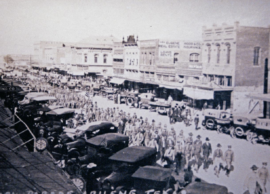
Early Downtown Abilene: 1880s-1910s
The city of Abilene grew around the Texas & Pacific Railway tracks, especially what we know as downtown, during the 1880s to the 1910s. New hotels, churches, shops, liveries, doctors’ offices and pharmacies, houses, and schools were all built within a thirty-year time span. By 1910, the town’s population reached 9,204 and its dynamic was rapidly changing. The introduction of … Early Downtown Abilene: 1880s-1910s

International Holocaust Remembrance Day – Cultural Heritage Exhibition 2024
International Holocaust Remembrance Day takes place each year on January 27th, the anniversary of the liberation of the Auschwitz-Birkenau Concentration Camp. This exhibition highlights the history of the Holocaust, displacement and mass murder of Jewish people, the role Texans played as liberators, and the history of Abilene’s Jewish community.

Universal Human Rights Month – Cultural Heritage Exhibition 2023
December is Universal Human Rights Month Universal Human Rights Month celebrates the landmark document that “enshrines the inalienable rights that everyone is entitled to as a human being – regardless of race, color, religion, sex, language, political or other opinion, national or social origin, property, birth or other status.” This month strives to promote this declaration and the continuing struggles … Universal Human Rights Month – Cultural Heritage Exhibition 2023
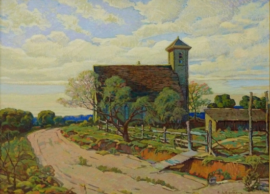
Texas Landscapes from The Grace Museum Permanent Collection
The Grace Museum (originally The Abilene Fine Arts Museum) has a history of collecting important prints, paintings, and drawings focusing on the Texas landscape. This companion exhibition features works of art collected during the last 76 years. Paintings by Edward Eisenlohr, Loren Mozley, Bob Stuth-Wade, and many others will be presented in this group exhibition exploring Texas landscape painting treasures … Texas Landscapes from The Grace Museum Permanent Collection
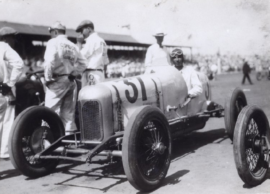
Abilene in the 1920s
When one thinks of the 1920s, images of flappers, jazz, and speakeasies immediately come to mind. While that is relatively true, for Abilene, the 1920s was an era of major change and growth, just like it was throughout the United States. The population of Abilene nearly doubled throughout the decade with the increase in businesses, buildings, railway usage, and updated … Abilene in the 1920s
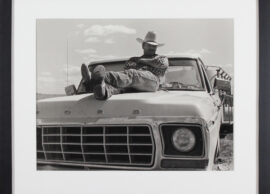
June Van Cleef: Texas Outback
June Van Cleef is a photographer from a large ranch in West Texas, about 100 miles from the United States and Mexican Border. She founded the photography department at Collin County Community College in Plano, where she taught for many years. In the 1990s, she received a sabbatical to photograph the people and landscapes of Presidio, Brewster, Jeff Davis, and Culbertson … June Van Cleef: Texas Outback
Independence Day – Cultural Heritage Exhibition 2023
Independence Day in the United States is celebrated every July 4th to commemorate the Declaration of Independence in 1776 with fireworks, parades, and parties. Throughout Abilene’s history, Independence Day has meant a day off work and celebrating the holiday with friends, family, and the entire city. Families gathered to watch parades, and sometimes even participate, with young boys following the … Independence Day – Cultural Heritage Exhibition 2023

Paul Manes: Odyssey
Paul Manes is a painter’s painter. The artwork selected for this solo exhibition is the ultimate statement of that fact. Surfaces and subjects morph into singular stunning testaments to Manes’ mastery of oil painting on canvases larger than life. Complex and solitary imagery up close and at a distance shares a haunting immediacy driven by the artist as philosopher paradigm. … Paul Manes: Odyssey
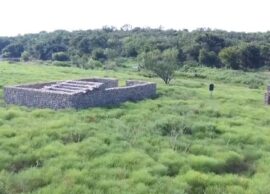
Smith’s Station on the Butterfield
Just over thirty miles northeast of Abilene sits the Chimney Creek Ranch, established in 1876, the ranch is home to cattle and native species along with conserved grasslands and water sources. However, before the ranch was formed, the Butterfield Overland Mail Route, which ran from 1858-1861, made its way through the area. On the ranch stands the remnants of the … Smith’s Station on the Butterfield
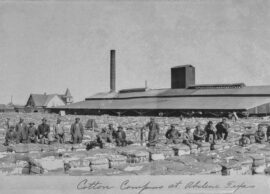
A Larger View: Historic Panoramic Photographs
Large panoramic photographs of landscapes or groups have been around since the invention of photography. Unlike today and the ease of taking a “pano” on a cell phone, panoramic photographs were taken on special cameras beginning in the 1840s. Capturing these large-scale photographs was a very involved and complex process. By the late 1890s and early 1900s, mass-produced panoramic cameras … A Larger View: Historic Panoramic Photographs